Gratitude: The Ancient Wisdom that Shapes Modern Students
“May we learn together, may we grow together, may our minds be illumined with wisdom, and may we never turn away from gratitude for the knowledge received.”
Taittiriya Upanishad (Krishna Yajurveda)
This ancient prayer reflects the sacred bond between teacher and student and reminds us that learning is not merely an academic activity but a shared journey grounded in respect and gratitude.
Gratitude means being thankful for the good things in life—both big and small. In students, this simple habit can create powerful changes. When children learn to appreciate their teachers, parents, friends and opportunities, they develop a positive mind-set. This positivity reduces stress, improves concentration and increases motivation to learn.
Modern psychology supports this ancient wisdom. Research by Robert Emmons and Michael McCullough shows that students who regularly practice gratitude feel happier, sleep better, and demonstrate greater persistence in completing tasks.
Studies published in the Journal of School Psychology reveal that grateful students are more engaged in class and often achieve better academic results. Gratitude shifts attention from complaints to possibilities.
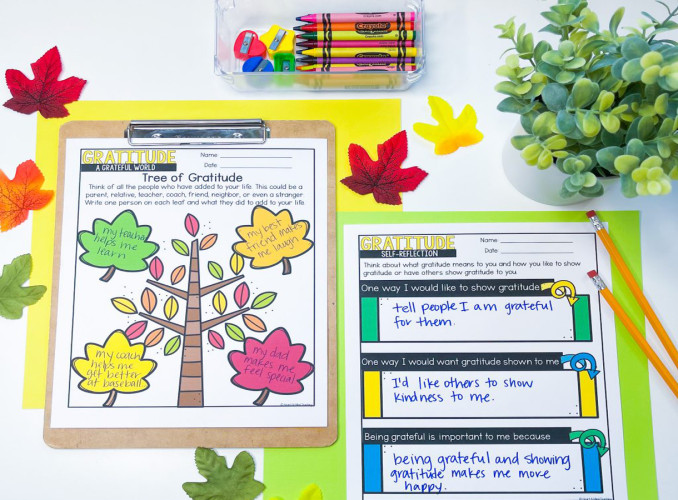
Consider a simple example. Aarav, a middle school student, often felt discouraged about his mathematics scores. His teacher introduced a daily gratitude journal activity in class. At first, Aarav wrote simple things like “I am thankful for my friend helping me” or “I am thankful my teacher explained again.” Within weeks, his attitude changed. He began focusing on improvement rather than failure. His confidence grew and gradually, so did his performance. The change began not with extra tuition, but with a shift in mind set.
How families and schools can nurture gratitude?
The answer is simple and practical, through
1.Daily sharing circles,
2. Thank-you letter writing,
3 Gratitude walls,
4. Appreciation assemblies and
5. Community service projects.
Parents can model thankfulness at home and appreciate effort, not just results.
Gratitude is not merely good manners—it is a life skill and a powerful inner strength. In today’s fast-paced world, where comparison, competition and constant distractions often create anxiety and dissatisfaction, gratitude brings balance to the mind and peace to the heart. It reminds us to value what we have rather than worry about what we lack. For students, it builds resilience; for teachers, it deepens purpose; for families, it strengthens bonds.
In every stage of life, gratitude nurtures contentment, emotional well-being and meaningful relationships. In these present times especially, when stress and uncertainty are common, cultivating gratitude is not just helpful—it is essential for living a fulfilled and harmonious life.